
AdsPower vs ClonBrowser: Which Anti-Detect Browser Wins?
Nov 18, 2026
MostLogin is a newer antidetect browser and cloud phone platform aimed at people who run many separate online identities from one machine. It combines Chromium-based browser profiles with rented Android cloud phones, and it has moved from a free Pioneer Program to paid tiers with a permanent free plan. This review weighs what the evidence actually supports, where the tool fits, and where you should be cautious.
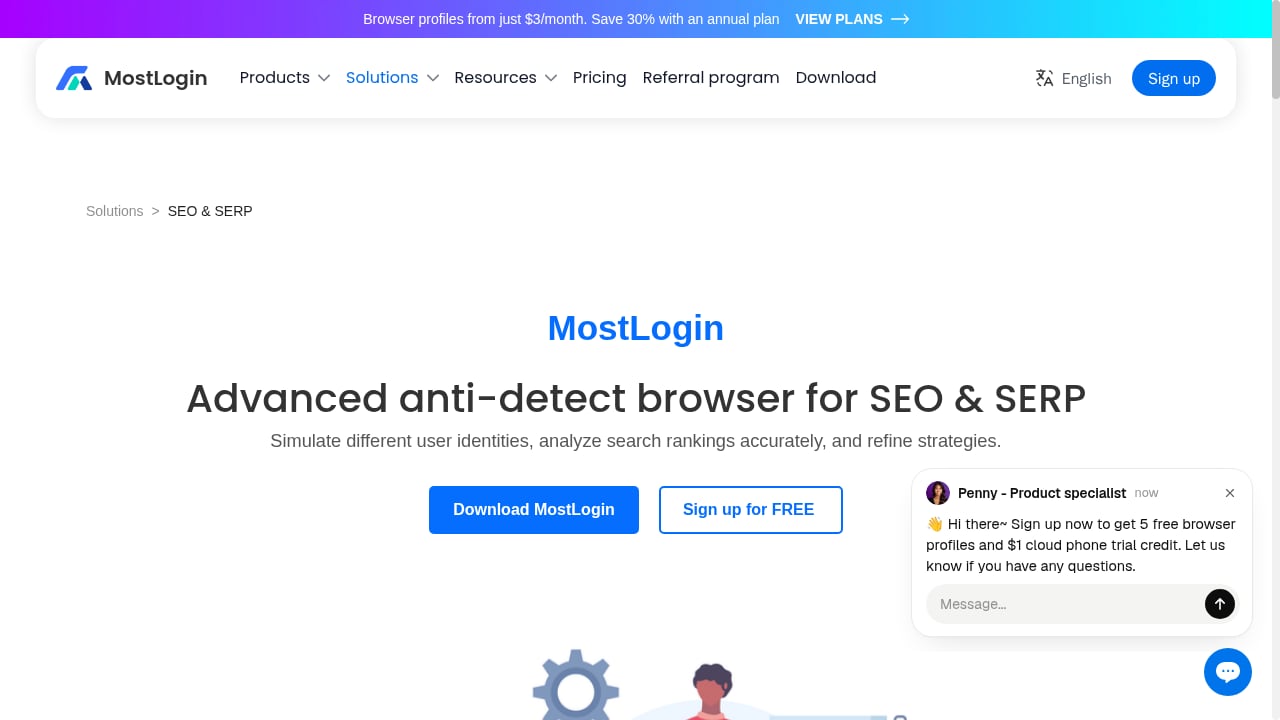
First viewport screenshot of www.mostlogin.com.
MostLogin creates isolated browser profiles. Each profile carries its own fingerprint parameters, cookies, local storage, and proxy binding so that platforms see unrelated devices instead of one operator. The cloud phone layer extends that idea to mobile apps, where desktop browser fingerprints are not enough.
The product context positions MostLogin for crypto, affiliate marketing, and eCommerce teams, with workflow automation and scalable growth as the pitch. Source evidence supports a broader set of users:
It is not a good first tool for someone who has never worked with proxies or fingerprinting. The controls are there, but the operator has to know what to do with them.
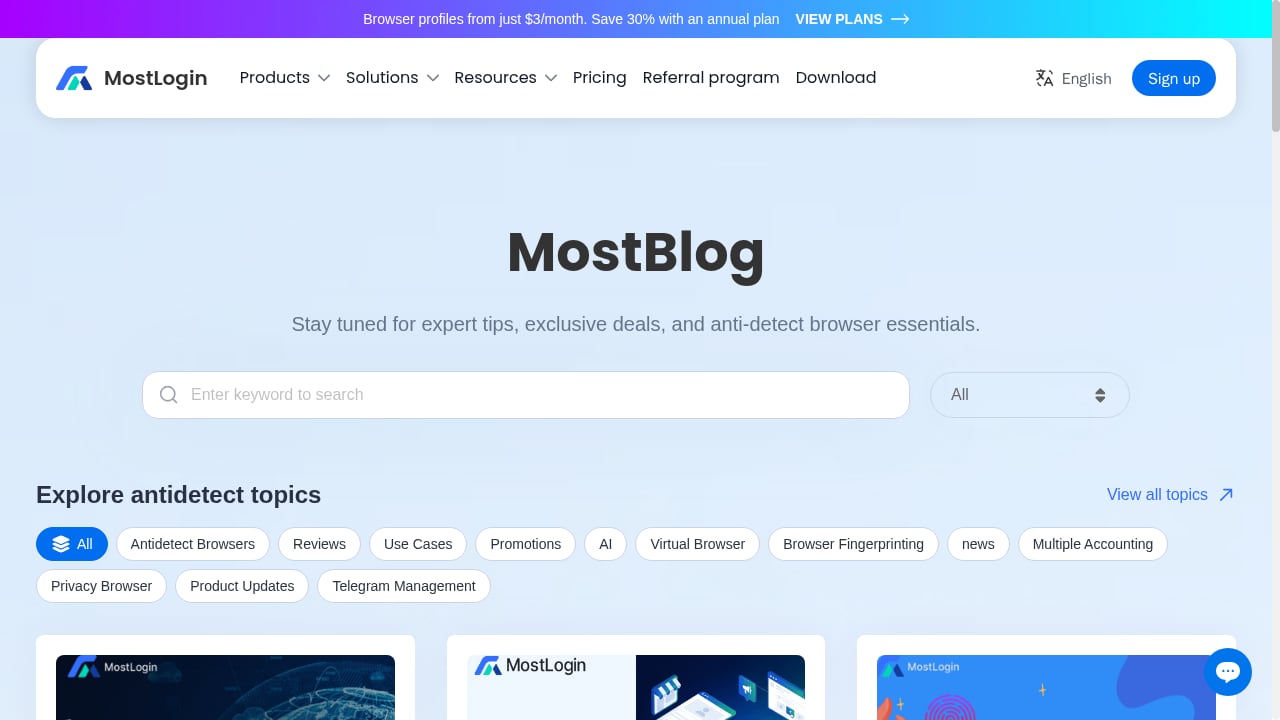
First viewport screenshot of www.mostlogin.com.
Each MostLogin profile exposes configurable parameters including user agent, timezone, WebRTC, screen resolution, canvas, WebGL, fonts, and hardware signals. Profile creation is detailed: you choose the browser OS (Windows, macOS, Linux, Android, or iOS), browser version, optional custom user agent, and a start URL. You can protect individual profiles with 2FA, randomize device name and MAC address, and import cookies from other sessions.
Batch creation is available for large fleets where micro-customizing every profile is unnecessary. MostLogin also supports importing profiles from Dolphin, Multilogin, and Morelogin using tokens or API IDs, which brings over cookies, history, data, and fingerprint preferences.
MostLogin supports HTTP, HTTPS, and SOCKS proxies per profile, with batch import for a whole proxy pool. It does not include proxy bandwidth in its plans, so you must buy proxies separately. This is the single most important operational caveat: profile isolation only works as well as the IP behind it. A shared or low-quality proxy undermines even a well-configured fingerprint.
For a deeper look at how proxy quality and fingerprint isolation interact, see the comparison of AdsPower, What Is My IP Address?, and MuLogin.
Most antidetect browsers stop at the browser. MostLogin rents or sells Android cloud phones that you operate from the same desktop dashboard. You can rent a device for a short task or acquire it permanently if you need to keep authentication sessions, installed apps, and device history. This matters for mobile-first platforms where app-level device signals carry more weight than desktop browser fingerprints.
Profile sharing and role-based permissions are included at every plan level, including the free tier. During the free Pioneer period, sharing was unlimited. One tested limitation: inviting a user who already belongs to another MostLogin team failed with a message that the user is already on the platform. If your agency model involves freelancers who sit on several client teams, validate the invite flow before you standardize on MostLogin. For general patterns in seat management, see Team Seats in Anti-Detect Browsers: AdsPower Collaboration.
API access is included on every plan, with local rate limits scaling from roughly 2 requests per second on the entry tier up to 20 per second on Enterprise. That is enough for scheduled posting, account warming, and status checks. RPA and MCP support are listed as coming soon, so teams that depend on those integrations today need a workaround through the existing API or a different tool.
MostLogin runs through a desktop app for Windows and macOS. There is no Linux client and no web app for managing cloud profiles, which will disappoint advanced users who work on Linux or prefer browser-based administration.
A practical setup sequence looks like this:
First viewport screenshot of www.mostlogin.com.
MostLogin uses the standard antidetect model: a free tier plus paid plans priced by profile volume and team seats. The evidence points to these signals rather than fixed numbers:
First viewport screenshot of www.mostlogin.com.
Use these criteria rather than a feature checklist:
For a wider field, see the ranked Top 10 Anti-Detect Browsers & Multi-Account Tools 2026 and the Top 10 Anti-Detect Cloud Browser Automation Products 2026. If your workflow leans on social scheduling, the Hootsuite review for 2026 explains how scheduling tools pair with isolated profiles.
Not yet without your own validation. It launched in March 2026, independent reviews are scarce, and one thorough test found bugs and fingerprint inconsistency. Run a controlled pilot with non-critical accounts before moving sensitive operations.
No. It supports HTTP, HTTPS, and SOCKS proxies per profile and offers batch import, but you must buy proxy bandwidth separately. Proxy quality is the main determinant of real isolation.
A rented or owned Android device hosted in the cloud and operated from the MostLogin desktop app. It lets you run mobile apps with unique device signals, which a desktop antidetect browser cannot provide.
Ten profiles permanently, with team collaboration included. This is a real free tier rather than a time-limited trial.
No. The desktop client is available for Windows and macOS, and there is no web app for managing cloud profiles.
Yes, through the API, which is included on every plan with rate limits from about 2 to 20 requests per second depending on tier. RPA and MCP support are listed as coming soon.
Yes. MostLogin imports profiles from Dolphin, Multilogin, and Morelogin using tokens or API IDs, including cookies, history, data, and fingerprint preferences.
MostLogin is a credible entrant with a genuinely useful combination: solid profile isolation, a cloud phone layer for mobile-first work, team features on every tier, and API access from the free plan. The permanent 10-profile tier makes evaluation low-risk. The caveats are real, though: a short track record, reported automation and fingerprint inconsistencies, no bundled proxies, no Linux client, and no RPA or MCP yet. Use it for pilots and light-to-moderate multi-account work now, validate it against your own fingerprint and proxy tests, and keep sensitive operations on a tool with a longer public record until MostLogin's independent evidence catches up.


