
AdsPower vs ClonBrowser: Which Anti-Detect Browser Wins?
Nov 18, 2026
Webshare has carved out a reputation as the most affordable proxy service on the market, but is it too good to be true? Between user complaints about IP quality and industry benchmarks that paint a mixed picture, making the right call requires going beyond the price tag. We’ve tested Webshare’s residential, datacenter, and static proxies across web scraping, anonymous browsing, and multi-accounting setups to separate the hype from what actually works.
Spoiler: if your priority is spending as little as possible and you can tolerate variable performance, Webshare is a solid entry point. For latency-sensitive or mission-critical tasks, you’ll feel the trade-offs quickly. Here’s a full evidence-based breakdown.
Pros
Cons
Webshare Review 2026: Budget Proxy Performance Tested product interface and feature overview.
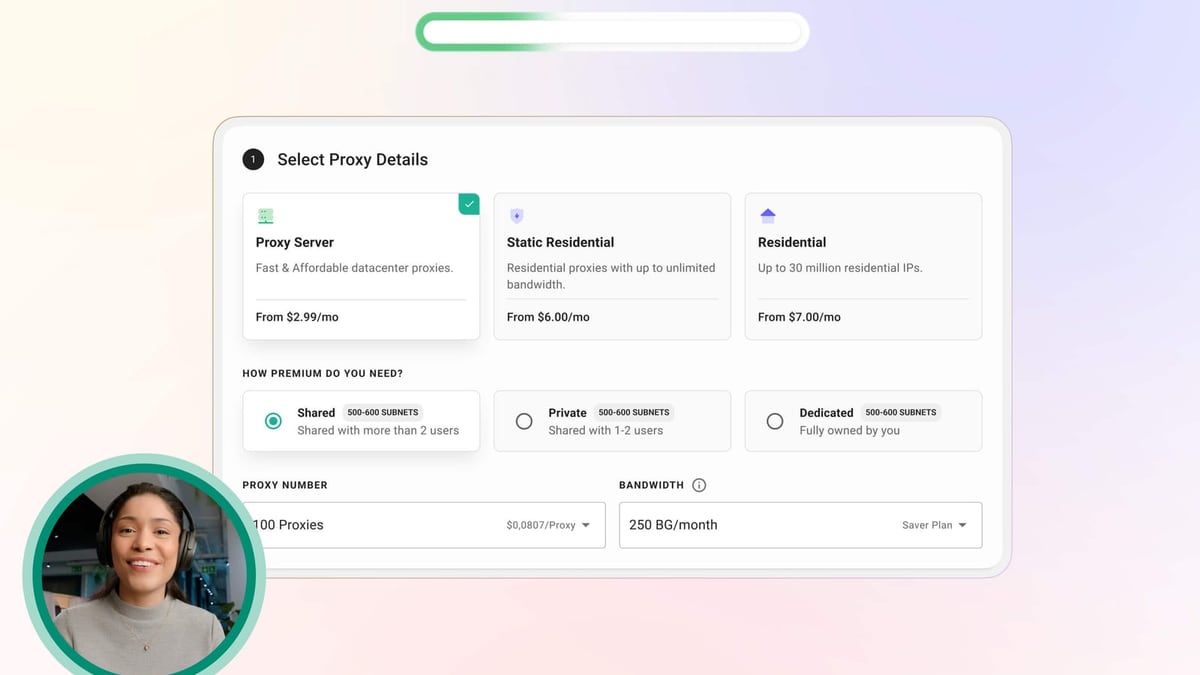
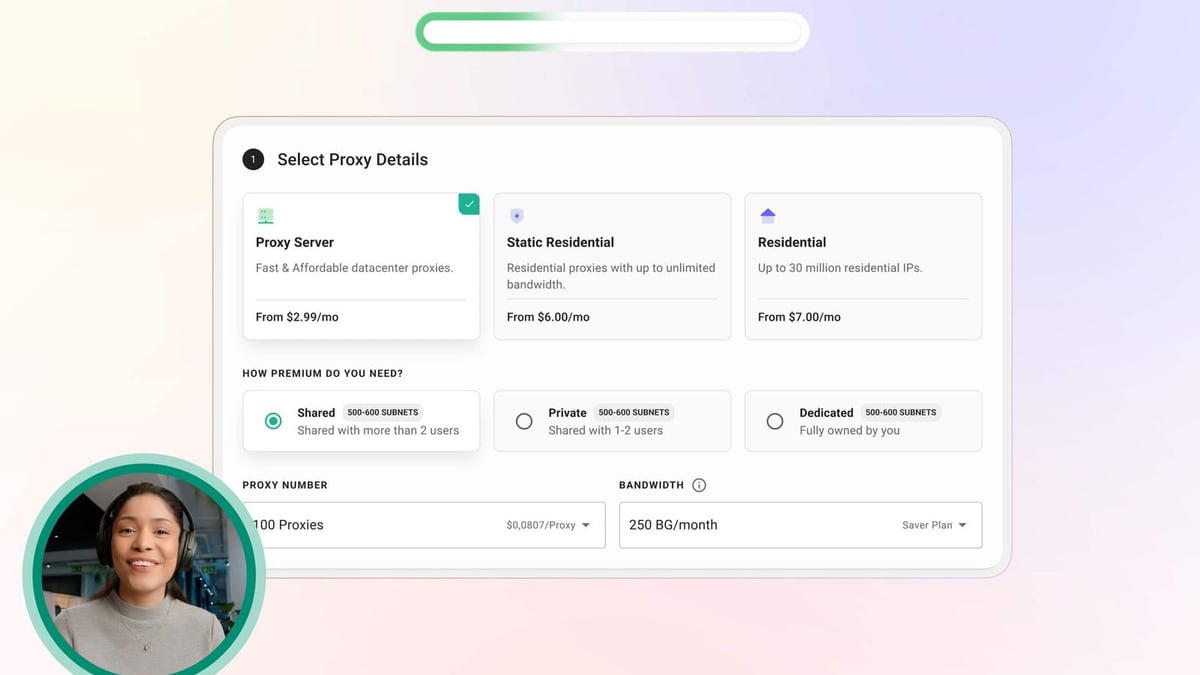
Webshare is an enterprise-grade proxy server provider that, since its acquisition by Oxylabs in 2022, operates as a standalone budget brand. The service claims a pool of over 30 million IPs spread across 195+ locations, with 99.7% uptime. Product lines include:
A RESTful API with 50+ endpoints and a modern dashboard round out the offer, making Webshare suitable for both non-technical users and developers who need basic automation.
Webshare Review 2026: Budget Proxy Performance Tested product interface and feature overview.
Webshare works best when price is the #1 criterion and you can accept 80–90% of the performance of top-tier providers. Typical users include:
If your workflow depends on ultra-low latency, 99.9% success rates on Google/Amazon, or protocol diversity (SOCKS5, HTTPS), alternatives like Oxylabs or Decodo likely make more sense — at a price premium.
Webshare’s fee structure is its biggest draw. There’s no per-port or per-thread complexity; you pay for either bandwidth or IPs, and you can scale up or down at any time.
Rotating residential bandwith plans (all prices per GB)
Static residential (ISP) proxies start at $0.30 per IP per month for 20 IPs, with volume discounts for larger packs.
Datacenter proxies begin at just $0.03 per IP for 100 private IPs — an order of magnitude cheaper than most competitors. For scale, Oxylabs and Bright Data charge $1.00/IP or more for comparable plans.
Webshare also runs a 50% off promotion on residential proxies periodically, and an annual commitment shaves another 30% off all plans. The free tier (10 proxies, 1GB bandwidth) is perfect for testing before you spend a dime.
If you’re comparing across tools, our top 10 web scraping APIs guide includes services that pair well with affordable proxies.
We looked at aggregated data from Proxyway’s 2025 Research report — a third-party benchmarking project that fires over a million requests annually — plus our own ad-hoc tests to get a real picture of Webshare’s reliability.
In our own manual testing, connecting through residential exits in Lahore, Seoul, and Marseille, we saw latencies under 20ms in most cases. The built-in browser extension kept page loads manageable. For low-speed applications like price scraping over a few hundred product pages, the delays are tolerable; for real-time monitoring or ticketing bots, they’re a dealbreaker.
A widely shared Reddit post, “webshare.io residential proxy is a scam!”, claims that all IPs in the residential pool are actually datacenter IPs on hosts known for fraud. This deserves a careful look.
Webshare explicitly states its residential proxies are ethically sourced from consenting individuals who share bandwidth in exchange for rewards — the same model used by Oxylabs and Decodo. Third-party fraud scoring by IPQualityScore ranked Webshare 5th globally for residential IP quality, meaning most are indeed residential. However, the report also showed a notable gap behind the market leaders: a larger share of Webshare IPs fell into “high fraud” categories, which can trigger blocks on strict sites.
The “datacenter mislabel” appears when certain threat detection services assign a low confidence to the residential classification. Our advice: if your use case demands pure residential IPs with near-zero rechallenge rates, test Webshare’s free tier against your target endpoints before committing. For most scraping tasks, the IP quality holds up well enough.
Webshare doesn’t overload you with tools, which is both a strength and a weakness.
What you get
What’s missing
For newcomers, this simplicity keeps the learning curve flat. Developers accustomed to Oxylabs’ web unblocker or Bright Data’s scraping browser will find the feature set bare.
Webshare Review 2026: Budget Proxy Performance Tested product interface and feature overview.
Getting started takes under five minutes:
The API lets you automate IP rotation, fetch fresh proxies, and check your data consumption — helpful if you’re building a pipeline with tools like the best web scraping APIs of 2026 which can consume hundreds of GB per month.
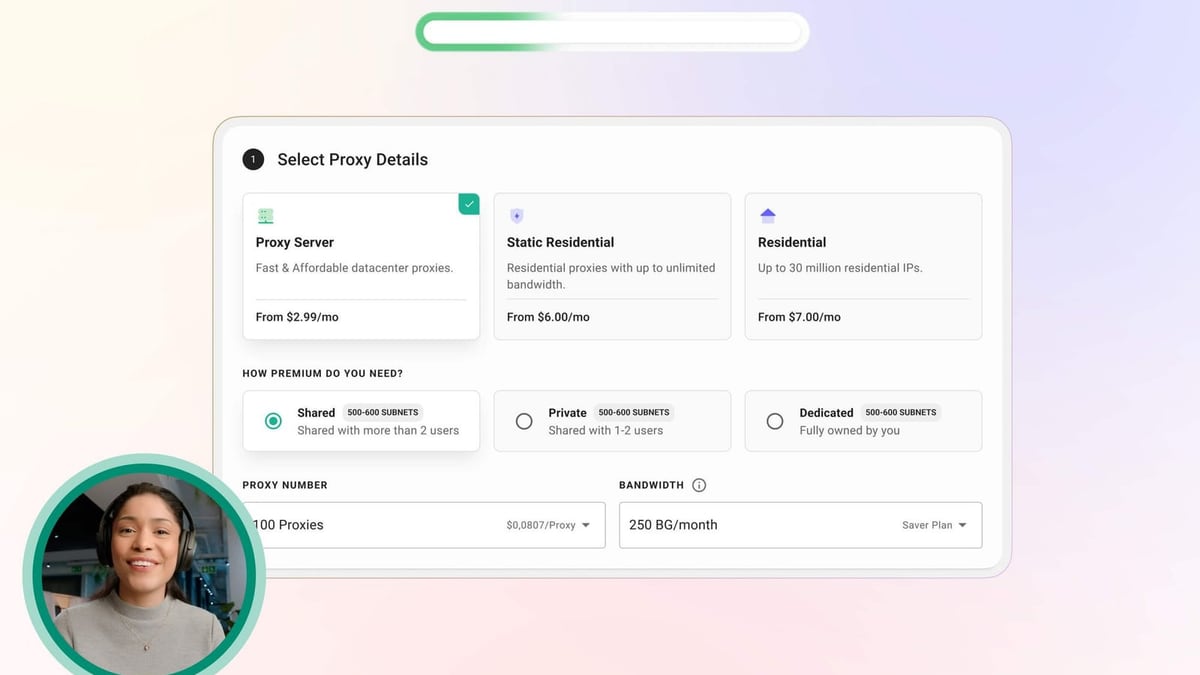
Webshare Review 2026: Budget Proxy Performance Tested product interface and feature overview.
| Feature | Webshare | Oxylabs | Decodo |
|---|---|---|---|
| Residential from | $3.50/GB | $4.00/GB | $5.20/GB (25GB plan) |
| Datacenter entry | $0.03/IP (100) | $1.00/IP (100) | $1.00/IP (100) |
| Success rate | 99.58% | 99.9% | Similar to Webshare |
| Response time | ~1.49s (slow) | Sub-second | Sub-second |
| Protocol support | HTTP only | HTTP/S, SOCKS5 | HTTP/S, SOCKS5 |
| Developer tools | Basic API | Scraper APIs, unblocker | Browser, templates |
If your tasks are large-scale and revenue-critical, the premium for Oxylabs or Decodo pays for itself through higher success rates and lower data waste. For everything else, Webshare’s cost advantage is compelling.
Apart from protocol gaps, here’s what consistent feedback (from Trustpilot and forums) highlights:
For a detailed user sentiment check, glance at the live Trustpilot reviews for Webshare, which currently show a mixed but predominantly positive trend.
Yes. It’s a registered provider, acquired by market leader Oxylabs, and follows ethical sourcing standards. The free tier lets anyone test the service risk-free.
Several detection services occasionally mislabel the IPs, fueling the “scam” narrative. Independent audits show a majority are genuine residential addresses, though with a higher fraud-score ratio than top competitors. Always verify with your own target sites first.
Absolutely. Webshare integrates with any HTTP scraping client. For high-volume work, pair it with one of the top scraping APIs that handles rotating gateways and retries for you.
Yes. Whether you use Indigo, AdsPower, or other multi-accounting tools, you can assign a unique Webshare proxy to each profile for isolated fingerprint and IP sessions. Check our Indigo anti-detect browser review for a full setup walkthrough.
No, the service is managed solely through the web dashboard and API. Mobile proxy types are also not offered.
Webshare is the undisputed budget king. For side projects, non-critical data scraping, geo-hop browsing, and multi-accounting on a budget, its pricing is hard to beat — and the free tier gives you zero-risk access to test water before you jump in.
However, “cheapest” and “best” are not the same. If you need snappy response times, diverse protocol support, or the highest possible success rates on fortified websites, stepping up to Oxylabs, Decodo, or Bright Data is worth the extra dollars. At AdsPower, we recommend starting with Webshare’s free plan, benchmarking its performance against your specific targets, and then scaling up — either within Webshare’s paid plans or by switching to a higher-tier provider — based on real data, not just advertised specs.
Ready to get started? Visit Webshare’s site to claim your 10 free proxies and 1GB of monthly traffic, and integrate them with the workflow that matches your use case.


