
AdsPower vs ClonBrowser: Which Anti-Detect Browser Wins?
Nov 18, 2026

CAPTCHAs are designed to separate humans from bots, but they also interrupt legitimate automation—scrapers, QA pipelines, RPA workflows, and data monitoring jobs. Anti Captcha is one of the longest-running services built to handle that interruption. This article explains what it does, how its API fits into an automation stack, what it costs, and where it makes sense versus where it doesn't.
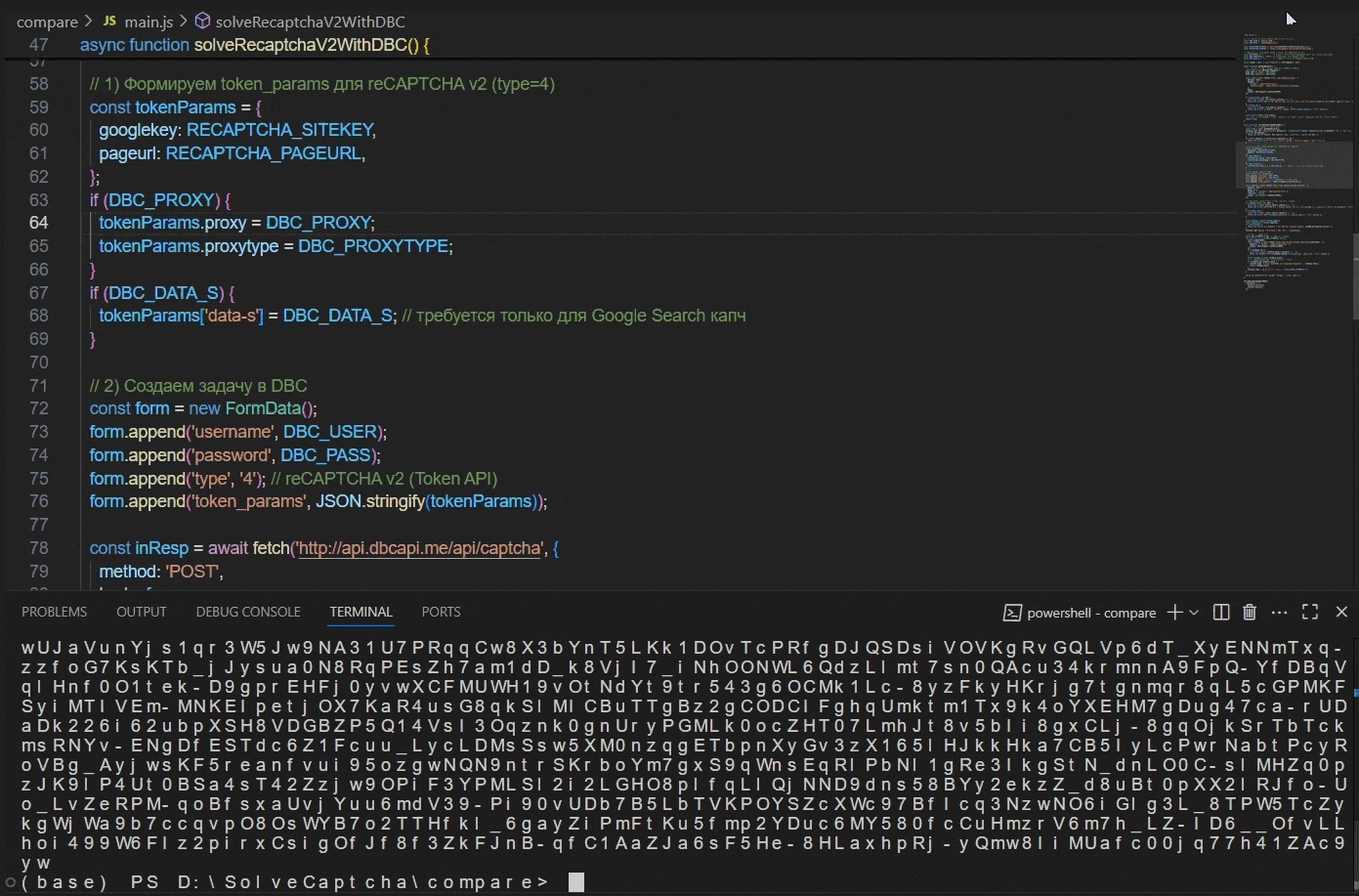
Anti Captcha Explained: How CAPTCHA Solving APIs Work - What Is Anti Captcha?.
Anti Captcha is a CAPTCHA-solving service that has operated since 2007. You send it a CAPTCHA challenge—an image, a site key, or a task payload—and it returns a solved token, text, or set of coordinates that your automation can submit to the target site.
The service supports more than a dozen challenge families, including:
According to the official Anti Captcha site, solving is human-powered, with a global workforce handling tasks around the clock. The API documentation lists core methods such as createTask, getBalance, getQueueStats, and test for debugging JSON requests.
Anti Captcha Explained: How CAPTCHA Solving APIs Work - How the Anti Captcha API Works.
The workflow is consistent across most integrations:
Official SDKs exist for Python, Node.js, Java, Go, PHP, and C#, and there are integration recipes for Puppeteer, Selenium, and Playwright. If you are already running browser automation, the Playwright setup guide covers installation and configuration before you wire in a solving step.
from anticaptchaofficial.imagecaptcha import *

solver = imagecaptcha()
solver.set_verbose(1)
solver.set_key("YOUR_API_KEY_HERE")
solver.set_soft_id(0)

captcha_text = solver.solve_and_return_solution("captcha.jpeg")
if captcha_text != 0:
    print("captcha text " + captcha_text)
else:
    print("task finished with error " + solver.error_code)
This pattern—initialize, set key, solve, check result—repeats across task types with different payload fields.

Anti Captcha Explained: How CAPTCHA Solving APIs Work - Anti Captcha Pricing and Throughput.
Pricing is pay-as-you-go with volume discounts. Based on published rates:
| Challenge type | Approx. price per 1,000 |
|---|---|
| Image CAPTCHA | $0.50–$0.70 |
| reCAPTCHA v2 | $0.95–$2.00 |
| reCAPTCHA v3 | $1.00–$2.00 (score-dependent) |
| reCAPTCHA Enterprise | ~$5.00 |
| GeeTest | ~$1.80 |
| Arkose Labs / FunCaptcha | ~$3.00 |
| Turnstile | ~$2.00 |
| Custom tasks / coordinates | ~$2.00 |
Reported solving speed is around 5 seconds per task, with capacity for roughly 1,000 tasks per minute. The enterprise page notes a $10 minimum for pay-as-you-go and mentions priority queues and EU data routing on request for high-volume accounts.

Anti Captcha Explained: How CAPTCHA Solving APIs Work - Where Anti Captcha Fits in an Automation Stack.
CAPTCHA solving is rarely the whole pipeline—it is one step. Common deployment contexts include:
In each case, the CAPTCHA layer sits alongside browser automation, proxy management, and session handling. If your workflow involves managing many accounts or sessions, an anti-detect browser like AdsPower can isolate each profile with its own fingerprint and proxy, which reduces how often you trigger CAPTCHAs in the first place. For a broader comparison of tools in that category, see the top anti-detect browsers and multi-accounting software ranking.
Solving is a cost. Preventing challenges is cheaper. Practical levers:
If you are running multi-account social workflows, the AdsPower with Hootsuite guide shows how profile isolation fits into scheduling and publishing.
The build-vs-buy decision usually comes down to volume and maintenance:
| Factor | Anti Captcha (buy) | In-house solver (build) |
|---|---|---|
| Upfront cost | Low | High (models, data, engineers) |
| Maintenance | Vendor handles CAPTCHA drift | You retrain and patch |
| Coverage | 13+ challenge families | Whatever you build |
| Latency control | Vendor queue | Full control |
| Compliance paperwork | Invoicing, DPA available | Internal |
At low volume, building rarely pays off. At high volume, the engineering tax of retraining models and monitoring drift often exceeds the per-solve cost. The enterprise tier explicitly targets teams processing 100k+ requests per day.
CAPTCHA solving is not universally permitted. Before integrating any solver:
Anti Captcha positions itself as infrastructure for data intelligence, ad verification, and compliance workflows—contexts where the operator has a legitimate reason to access the data.
It solves CAPTCHA challenges programmatically so automation scripts can continue past bot checks. Typical uses include scraping, price monitoring, SERP tracking, and RPA.
Image CAPTCHAs start around $0.50 per 1,000. reCAPTCHA v2 runs $0.95–$2.00 per 1,000, and harder challenges like Arkose Labs cost about $3.00 per 1,000. Volume discounts apply.
Yes. The service states that 100% of CAPTCHAs are solved by human workers, not machine learning models.
Yes. Official SDKs and integration tutorials exist for Selenium, Puppeteer, and Playwright, plus browser plugins for Chrome, Firefox, and Safari.
Yes. Turnstile is listed as a supported challenge type at roughly $2.00 per 1,000 solves.
Use stable browser fingerprints, quality residential proxies, human-like pacing, and persistent sessions. Anti-detect browsers such as AdsPower help by isolating each profile's fingerprint and proxy configuration.
Anti Captcha is a mature, well-documented solving service with broad challenge coverage and transparent pricing. It is best treated as one component in a larger automation stack—paired with fingerprint management, proxy hygiene, and sensible pacing. If your workflows involve many accounts or sessions, reducing CAPTCHA triggers through profile isolation is often more valuable than solving them faster. Start with the anti-detect browser comparison to see how fingerprint depth affects challenge frequency, then layer in a solver only where the economics justify it.


