
AdsPower vs ClonBrowser: Which Anti-Detect Browser Wins?
Nov 18, 2026
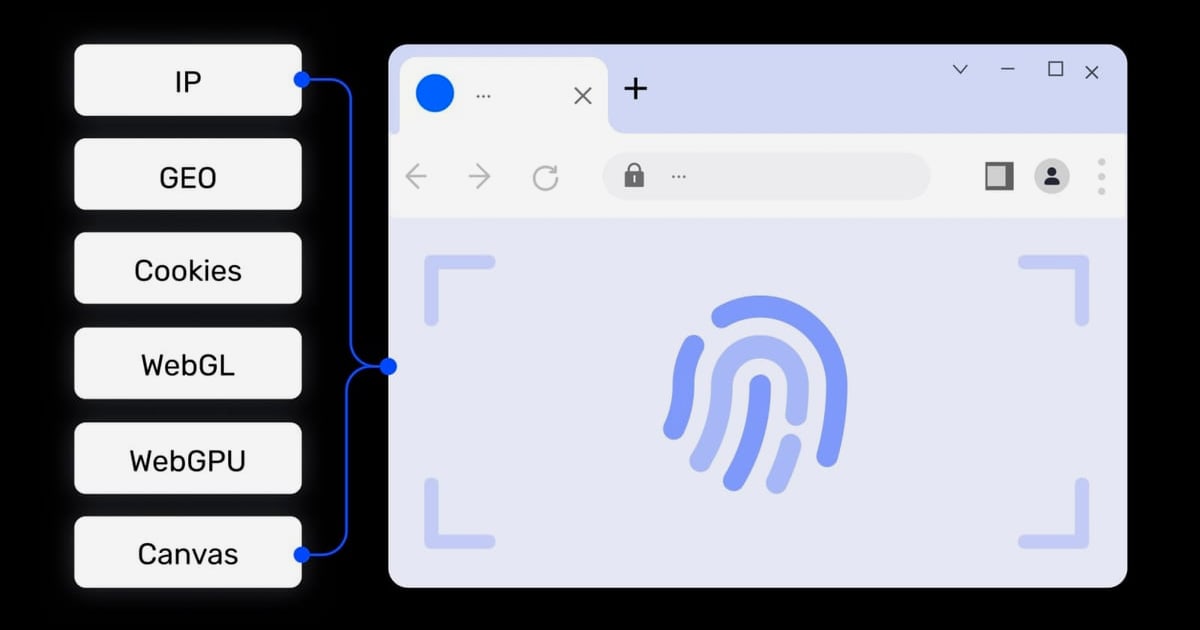
Managing dozens of e-commerce, social media, or advertising accounts without triggering platform bans requires more than just separate profiles—it demands a perfectly paired anti-detect browser and residential proxy network. AdsPower creates isolated fingerprint environments, while PacketStream supplies fresh residential IPs that look like real home connections. Combining them gives you an unlinkable, geolocation-flexible setup for cross-border operations, web scraping, and multi-account marketing. This guide walks you through integrating the two from scratch, complete with practical examples and fixes for common pitfalls.

How to Use AdsPower Fingerprint Browser with PacketStream product interface and feature overview.
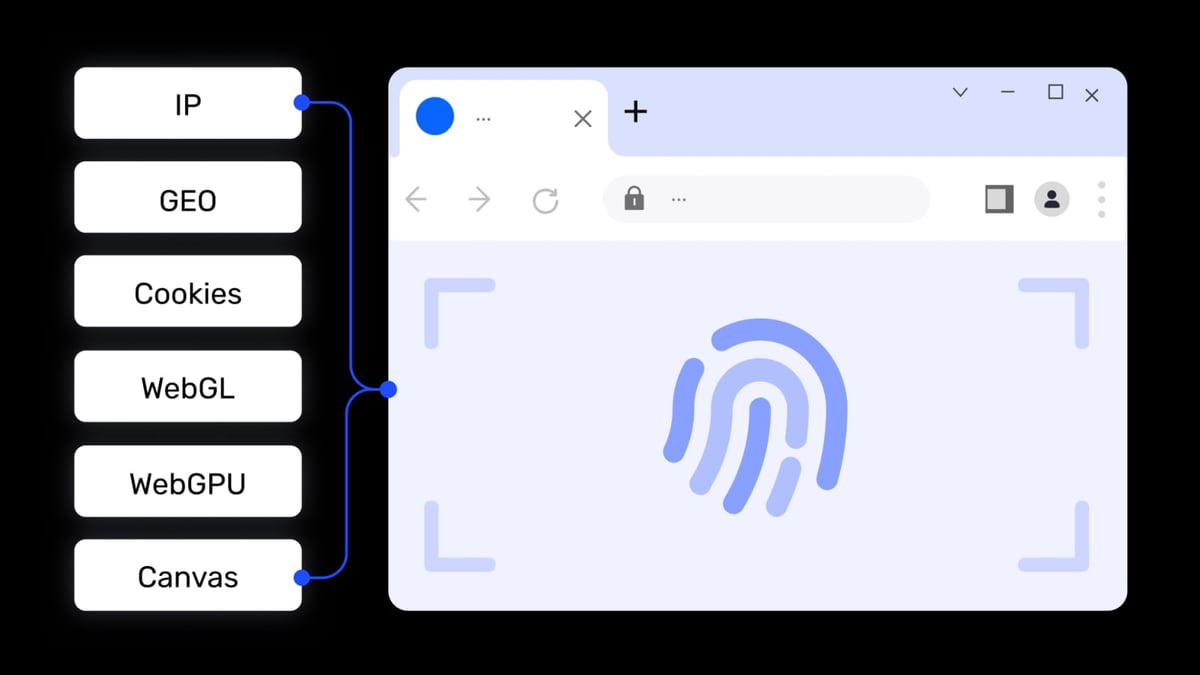
Platforms like Amazon, Facebook, Google, and TikTok use advanced linking algorithms—browser fingerprinting, IP address analysis, and behavioral patterns—to flag related accounts. AdsPower alone spoofs over 20 fingerprint parameters (Canvas, WebGL, AudioContext, WebRTC, fonts, etc.) inside independent browser environments. But if all environments share the same datacenter IP or a small proxy pool, the IP footprint still correlates. PacketStream’s peer-to-peer residential network fills this gap with undetectable IPs from real devices worldwide.
This combination solves three core problems:
Whether you’re an affiliate marketer running global campaigns, a dropshipping seller managing multiple storefronts, or a data analyst scraping competitors, the dual-layer isolation keeps your operations smooth and ban‑free.
How to Use AdsPower Fingerprint Browser with PacketStream product interface and feature overview.
Before starting, make sure you have:

How to Use AdsPower Fingerprint Browser with PacketStream product interface and feature overview.
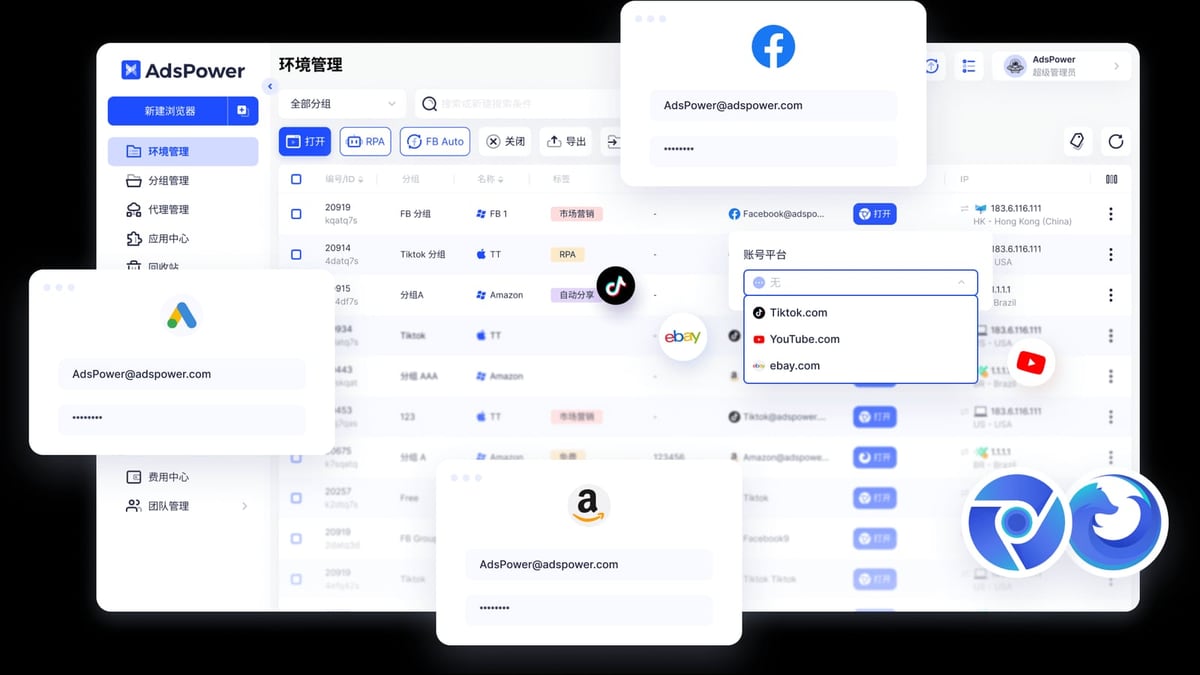
Open the AdsPower client and navigate to Environment Management. Click New Browser.
Give your profile a descriptive name (e.g., “Amazon‑US‑Store1”). Select a browser kernel—SunBrowser (Chromium‑based) for most use cases, or FlowerBrowser (Firefox) if your platform demands it. You can leave the default fingerprint settings or customize them for advanced spoofing; AdsPower auto‑generates a unique digital fingerprint for each profile.
In the same creation window, go to the Proxy section. Select Custom. Now fill in the details from your PacketStream account:
HTTP or SOCKS5. PacketStream supports both; HTTP is sufficient for most platforms.proxy.packetstream.io31112📘 For the latest PacketStream endpoint and authentication details, always refer to the PacketStream setup page and the general AdsPower proxy configuration guide.
If you want to force a specific country, append the country code to your username: username‑us. PacketStream supports over 200 countries and thousands of cities. Add the country code without spaces for geo‑targeted IPs.
Before saving, click Check Proxy. AdsPower will test the connection using the provided credentials. You should see a success message with the detected IP address and location. If it fails, double‑check the host, port, and credentials, and confirm that your PacketStream account has bandwidth remaining.
Click OK to create the profile. Back in Environment Management, find your new profile and click Open. AdsPower launches a fresh, isolated browser window with its own fingerprint and the PacketStream residential IP. Visit an IP‑check site like ipinfo.io to confirm you’re seeing a residential IP from the correct country.
How to Use AdsPower Fingerprint Browser with PacketStream product interface and feature overview.
Imagine you operate ten Amazon seller accounts across the US, UK, and Germany. Amazon aggressively links accounts through browser fingerprints and IP patterns. Here’s how to set them up safely:
youruser‑us, youruser‑gb, youruser‑de.With this setup, every account looks like it’s operated from a different home computer in the required country. PacketStream’s IP rotation ensures the IP changes periodically (or you can keep a static session by using a consistent username suffix), preventing long‑term IP blacklisting while staying undetectable.
Once your profiles are running, you can scale further with AdsPower’s built‑in tools:
For an example of integrating AdsPower with another premium proxy network, see our guide on using AdsPower with NetNut. The proxy setup steps are identical; only the credential format differs.
youruser‑nyc for New York City) to reduce latency.us, not usa.Can I use PacketStream’s free trial with AdsPower?
Yes. Sign up for PacketStream; you’ll receive a small amount of free bandwidth to test. Follow the same steps above. The trial is enough to set up and verify a few profiles.
Does PacketStream work with both SunBrowser and FlowerBrowser?
Absolutely. AdsPower’s proxy settings apply to both kernels identically. Use the same credentials in the profile’s proxy tab regardless of which engine you choose.
How many proxies do I need for 50 accounts?
The general rule is one unique PacketStream IP per profile at a time. Since PacketStream uses rotating residential IPs, you don’t need static IPs unless a platform requires a consistent IP for login. For most platforms, create 50 profiles, each with its own PacketStream credential entry (you can reuse the same PacketStream account across all profiles; the service manages IP rotation automatically).
What’s the difference between this combo and using AdsPower with datacenter proxies?
Datacenter proxies are faster and cheaper but easily flagged by strict platforms. Residential proxies from PacketStream mimic real home connections, drastically reducing CAPTCHAs and blocks. For high‑security platforms like banking sites or strict social networks, residential is essential.
Integrating PacketStream with AdsPower is straightforward and immediately improves account safety, geolocation flexibility, and automation reliability. The key is ensuring every profile lives in its own clean bottleneck—isolated fingerprint plus undetectable residential IP. Once you’ve mastered this setup, explore AdsPower’s RPA and team collaboration features to scale without adding hardware.
Still deciding which anti‑detect browser fits your operation? We’ve tested the leading alternatives in our detailed AdsPower vs. Octo vs. Hidemyacc comparison. And for more proxy‑browser integration guides, check out the resources at AdsPower—where we break down every tool you need for secure multi‑account management.
Start your free trials, run a few test profiles, and you’ll quickly see why thousands of cross‑border operators rely on this exact combination for daily wins.


