
AdsPower vs ClonBrowser: Which Anti-Detect Browser Wins?
Nov 18, 2026
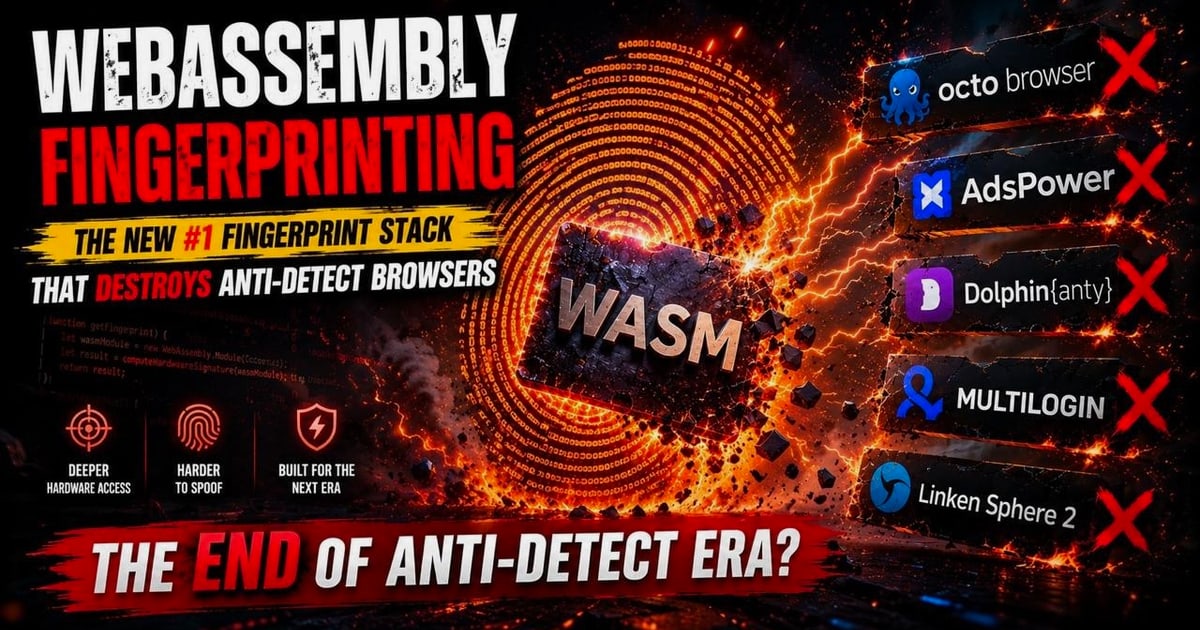
When you need to run multiple Amazon, Facebook, TikTok, or cryptocurrency accounts on a single device, ordinary browser cookie isolation is far from enough. Antidetect browsers (also called anti-association browsers or anti-detection browsers) generate an independent Canvas, WebGL, User Agent, timezone, and IP environment for each profile, making it hard for platforms to link multiple accounts to the same person.
There are many tools on the market, but the ones that cross-border sellers and affiliate marketing teams repeatedly compare come down to three: AdsPower, Linken Sphere, and Maskfog antidetect browsers. This article does not pile up spec sheets. Instead, it breaks things down across four dimensions—fingerprint isolation, automation capability, team collaboration, and pricing and onboarding cost—and explains who each tool is truly suited for.
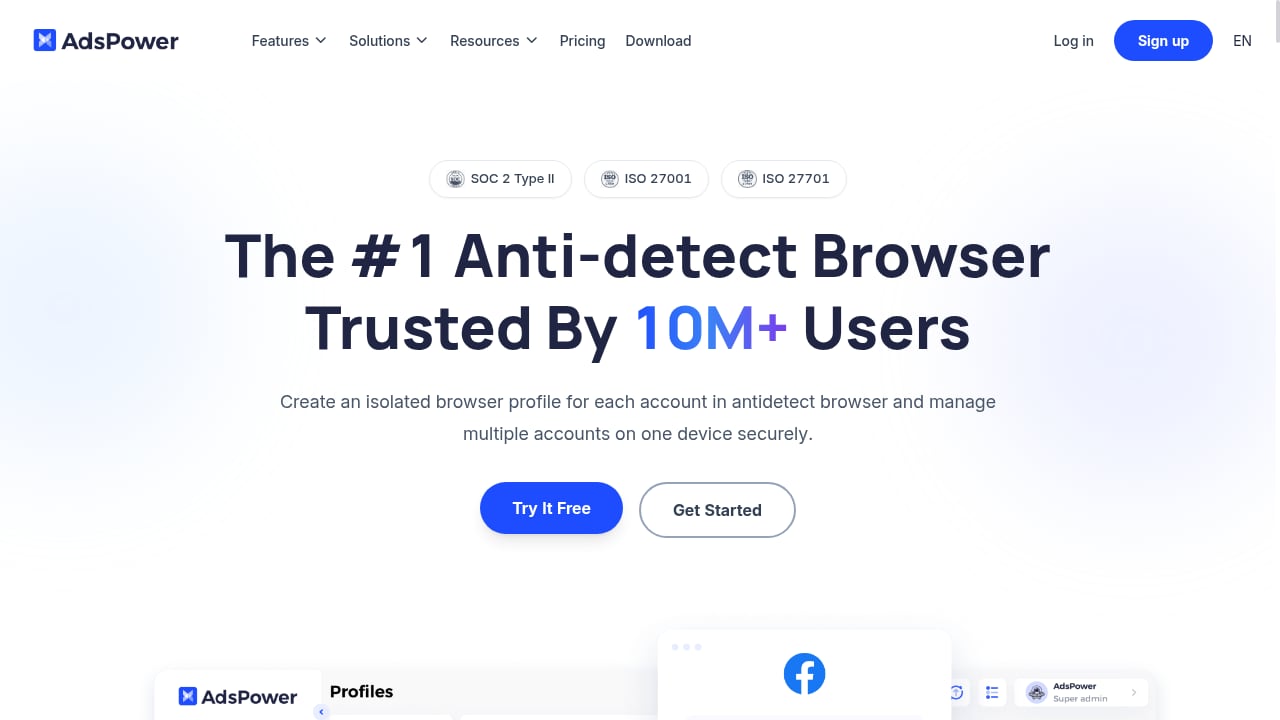
First viewport screenshot of AdsPower - Best Antidetect Browser for Multi-Accounting.
AdsPower positions itself as "safely managing multiple accounts on one device," serving cross-border e-commerce sellers, social media marketers, affiliate marketers, and digital agencies. It generates unique fingerprints through isolated browser environments and supports proxy integration, RPA and Local API automation, team collaboration, and cross-device synchronization. Official data shows more than 9 million users worldwide, covering multi-account scenarios on platforms such as Amazon, Facebook, Google, and TikTok. It offers a free plan and paid subscriptions, and recently added an AI Agent for conversational automation.
Linken Sphere is an anti-detection browser for ad placement, cryptocurrency, and e-commerce platform management. Its core selling point is thorough profile isolation—cookies, cache, sessions, and fingerprints are not shared between profiles, thereby avoiding "chain bans." It also offers team collaboration with fine-grained permission controls, automation that is less likely to trigger bot detection, and protection against financial fraud. The product's history dates back to 2017, and the company says it had more than 1 million users worldwide by 2020, positioning itself as an industry leader.
Maskfog is designed specifically for cross-border e-commerce and overseas marketing, offering multi-account management, independent fingerprint environments, plugin support, and team collaboration. It achieves complete browser environment isolation by covering full fingerprint information settings, and comes with a clean, exclusive cloud device service, making the environment in which accounts open unique, authentic, and stable, with IP geolocation covering North America, Europe, Southeast Asia, and other regions. The company lists eight major use cases: account management, social media marketing, account isolation, ad verification, store operations, brand protection, retail price comparison, and page detection. The product offers a free plan, with exclusive devices starting at $4.99/month, and supports Windows and macOS. The company is registered in Singapore and operated by Guangzhou Make Information Technology Co., Ltd.
All three tools can achieve "no sharing of cookies and cache between profiles," which is the basic requirement. The difference lies in the breadth of fingerprint coverage and the consistency of the environment.
A common misconception: no matter how good fingerprint isolation is, if IP quality is poor or the same IP repeatedly logs into multiple accounts, platform risk controls will still be triggered. All three tools are only the "environment layer"; proxy quality must be evaluated separately.
First viewport screenshot of Check the Release & Update Notes of AdsPwer.
Automation is a key indicator that distinguishes tool maturity, especially for teams that need to warm up accounts, list products, or run ads in bulk.
AdsPower offers two paths: RPA and Local API. RPA is suitable for recording repetitive actions such as clicks, scrolling, and input, and can be reused without programming; Local API is aimed at developers and can connect to custom scripts or third-party scraping tools. If you need to combine browser profiles with a scraping API, you can refer to the workflow explanation in How to Use AdsPower with Scrapingpass. One reminder: RPA is powerful but has a non-trivial configuration threshold, so new users are advised to first run a small workflow with the free plan.
Linken Sphere's automation focuses on "not triggering bot detection," which is important for ad verification and affiliate marketing scenarios—being identified as a bot often means the account is directly restricted.
Maskfog's public materials describe automation relatively limitedly, emphasizing environment isolation and cloud devices more, making it suitable for teams that mainly operate manually and have low automation needs.
First viewport screenshot of Check the Release & Update Notes of AdsPwer.
When the number of accounts exceeds what an individual can manage, team collaboration becomes a necessity.
| Dimension | AdsPower | Linken Sphere | Maskfog |
|---|---|---|---|
| Free plan | Yes | Not specified in public materials | Yes |
| Entry price | Paid subscription | Paid subscription | Exclusive devices from $4.99/month |
| System support | Multiple platforms | Multiple platforms | Windows, macOS |
| Cloud devices | Configure proxy yourself | Configure proxy yourself | Built-in exclusive cloud devices |
It should be noted that the pricing structures of the three tools differ significantly: AdsPower and Linken Sphere lean more toward "subscription by profile/seat," while Maskfog treats cloud devices as a separate billing item. If your team size will expand rapidly, it is advisable to first confirm the "marginal cost of adding seats" rather than only looking at the entry price.
First viewport screenshot of Check the Release & Update Notes of AdsPwer.
Choose AdsPower if you:
Choose Linken Sphere if you:
Choose Maskfog antidetect browser if you:
If you are still hesitating among other similar tools, you can further refer to the horizontal comparison in AdsPower vs Octo Browser vs Maskfog, as well as the differences in fingerprinting and automation in AdsPower vs Undetectable vs MuLogin.
Yes, but it is not recommended to mix them on the same batch of accounts. Different tools have different fingerprint generation logic, and switching the same account between different tools may cause sudden environment changes, which actually increases risk control risk. Once you choose one, keeping the environment stable is safer.
AdsPower and Maskfog both offer free plans, suitable for validating workflows and testing a small number of accounts. Once the number of accounts increases or team collaboration is needed, upgrading to a paid plan is usually necessary. Linken Sphere's free option is not specified in public materials, so it is advisable to consult the vendor directly.
No. Antidetect browsers solve the problem of "environment association," but account bans can also result from IP quality, abnormal operating behavior, duplicate payment information, or platform policy changes. Tools only reduce risk; they do not eliminate it.
AdsPower and Linken Sphere usually require you to configure third-party proxies yourself; Maskfog comes with exclusive cloud devices, which is equivalent to packaging the proxy step into the service. Which to choose depends on whether you have a stable proxy provider.
Based on public materials, Maskfog's built-in cloud devices and free plan are friendlier to beginners; AdsPower is comprehensive but has many configuration items and requires some learning cost; Linken Sphere leans more toward experienced professional users.
AdsPower, Linken Sphere, and Maskfog antidetect browsers are not in a relationship where one comprehensively crushes the others; instead, each serves different operational stages and team structures.
The safest approach is: first use a free plan or trial period to run through a real account workflow, observe fingerprint detection results and proxy stability, and then decide which one to invest in long term. Tools are only infrastructure; what truly determines account survival rate is your operational strategy and environment management habits.


