
AdsPower vs ClonBrowser: Which Anti-Detect Browser Wins?
Nov 18, 2026
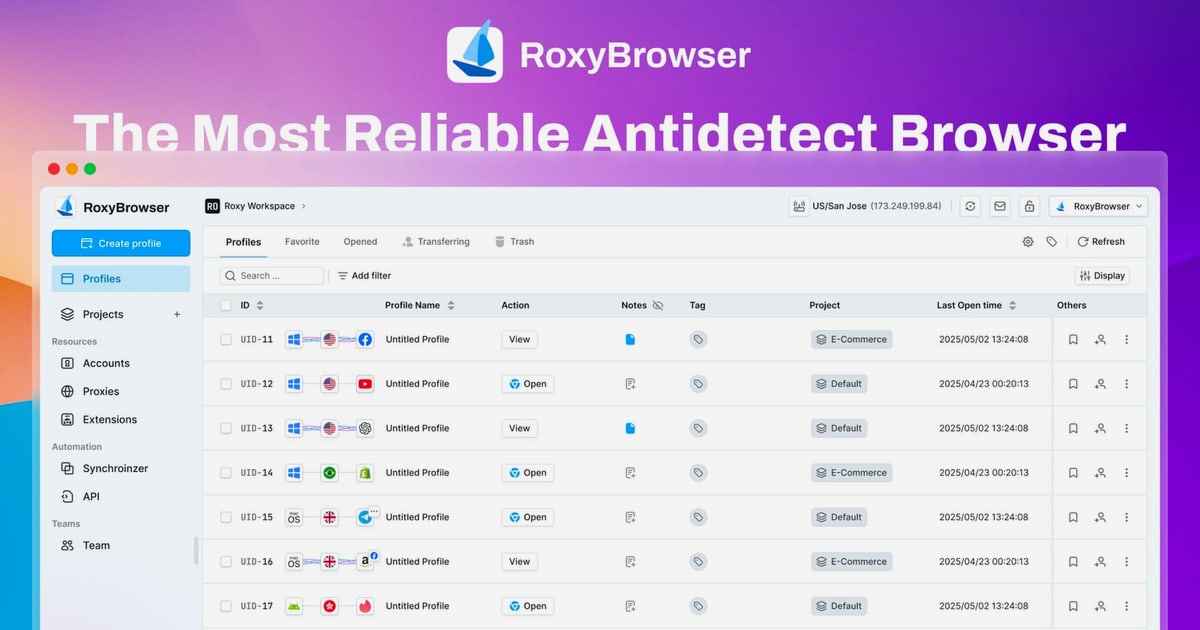
RoxyBrowser is a Chromium-based antidetect browser that creates isolated browser profiles with unique fingerprints for managing multiple accounts. It targets e-commerce sellers, affiliate marketers, social media managers, and scraping teams who need to keep accounts separated without triggering platform bans. This review examines what the tool actually does, where it falls short, and whether its free trial is enough to evaluate it properly.
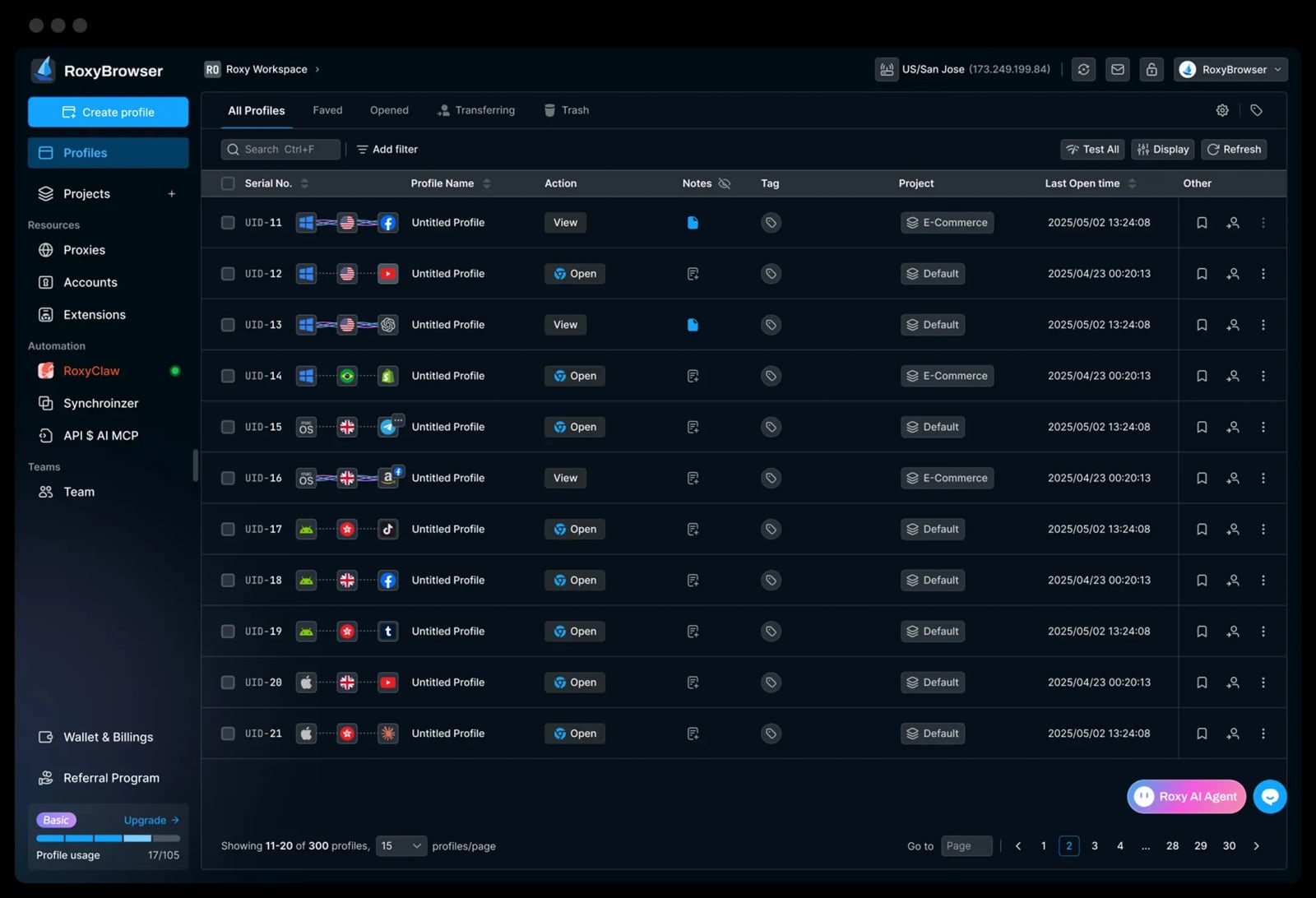
Antidetect Browser for Multi-Accounting - Free Trial | RoxyBrowser product interface.
RoxyBrowser generates a unique browser fingerprint for every profile you create. Each profile runs in its own container with separate cookies, cache, local storage, and configurable fingerprint parameters. The goal is straightforward: when you log into Account A and Account B from the same machine, the target platform should not be able to link them.
The browser is built on Chromium, so the interface feels familiar. You install it on Windows or macOS, create an account inside the app, and start building profiles. The free trial includes 5 profiles, which is enough to test the core workflow but tight for any real operation.
Unlike some competitors, RoxyBrowser does not bundle proxies. You bring your own HTTP, HTTPS, SOCKS4, or SOCKS5 proxies and assign them per profile. That keeps the subscription cost lower but adds a separate line item and a configuration burden.
When you create a profile, RoxyBrowser exposes a set of fingerprint parameters:
The depth here is reasonable for small teams doing basic multi-accounting. It is not the deepest fingerprint engine on the market — competitors like AdsPower and Kameleo expose more granular controls and publish more transparent documentation about what each parameter does. If your threat model includes sophisticated anti-fraud systems, you will want to compare fingerprint depth carefully before committing. For a broader comparison, see AdsPower vs Kameleo: Anti-Detect Browser Comparison 2026.
One practical limitation: RoxyBrowser only supports Chromium. There is no Firefox engine option, which matters if your target platforms expect Firefox-specific fingerprint signals.
RoxyBrowser supports third-party proxies across common protocols. You configure each profile individually, which gives you flexibility to mix providers and geographies. The downside is operational overhead.
Every profile needs a proxy assigned, tested, and maintained. A misconfigured proxy can leak your real IP or trigger a platform's security system. For teams running dozens or hundreds of profiles, this manual layer becomes a meaningful time sink and a source of errors.
If you are already running proxy infrastructure for other tools, this is manageable. If you are starting from scratch, budget for both the proxy service and the setup time. The total cost of ownership is higher than the subscription price suggests.
RoxyBrowser offers automation hooks via API, Selenium, and Puppeteer. This is enough for basic scripting — profile creation, launching, and some bulk operations. It is not a full automation platform. Teams doing heavy scraping or complex workflow orchestration may find the hooks limited compared to more mature antidetect browsers.
For teams already using Playwright, the automation model is similar in spirit. If you are evaluating whether RoxyBrowser fits into a Playwright-based pipeline, review Playwright Setup: Install, Configure, and Run Tests to understand the baseline requirements before adding browser fingerprint management on top.
In light to moderate use, RoxyBrowser performs acceptably. Profile launch times are reasonable, memory usage stays under control, and crashes are infrequent. Profile isolation works — cookies and cache do not cross between profiles.
At scale, the picture changes. Users running 50+ concurrent profiles on older hardware report lag when switching sessions and occasional freezing during batch operations. macOS performance is slightly behind Windows, with slower load times and less responsive navigation reported by some users.
If you plan to run large profile counts, invest in a machine with sufficient RAM and a modern CPU. The browser is not uniquely resource-hungry, but it is not optimized for extreme scale either.
RoxyBrowser includes team-oriented features: separate workspaces, permissions, shared profile control, and encrypted cloud storage. Reviewers on Product Hunt highlight these as strengths, particularly the ability to share profiles without exposing credentials.
For agencies managing client accounts or teams distributing work across operators, these features matter. They are not as deep as what enterprise-focused competitors offer, but they cover the basics. Access control exists but is described as simple — busy agencies may want more granular role management.
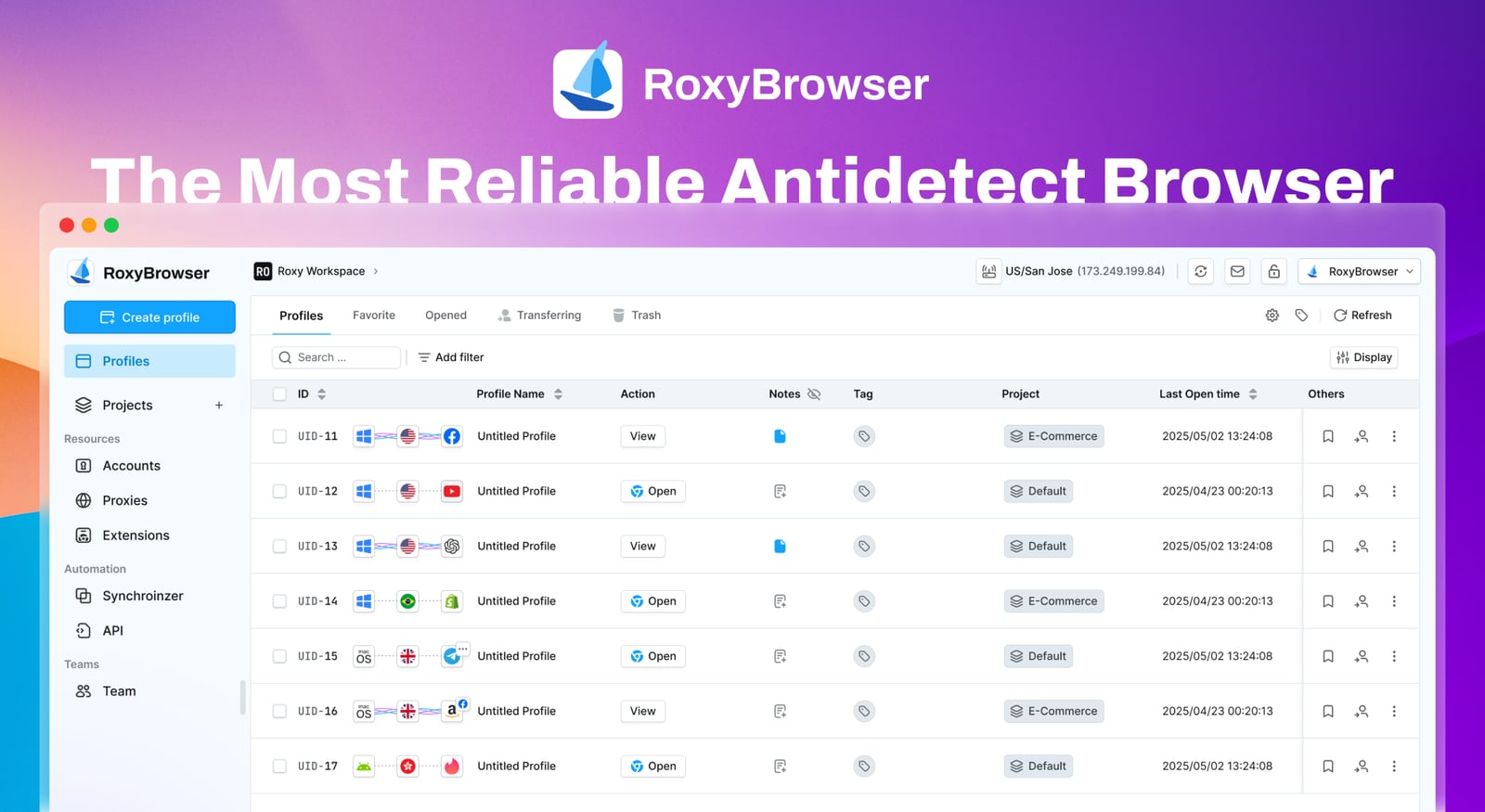
Antidetect Browser for Multi-Accounting - Free Trial | RoxyBrowser product interface.
The free trial includes 5 profiles. That is enough to test fingerprint creation, proxy assignment, and basic multi-account workflows. It is not enough to evaluate performance at scale or team collaboration features meaningfully.
Paid plans scale by profile count. Because RoxyBrowser does not include proxies, your effective monthly cost is subscription plus proxy service. When comparing against tools that bundle proxies, calculate the total before deciding.
For a broader view of how RoxyBrowser's pricing and features stack up against alternatives, see the Top 10 Anti-Detect Browser & Cloud Phone Platforms 2026.
First viewport screenshot of Earn More with Secure Affiliate Marketing | RoxyBrowser.
Good fit:
Poor fit:

Antidetect Browser for Multi-Accounting - Free Trial | RoxyBrowser product interface.
Before committing, run this checklist:
For a direct comparison of fingerprint browsers across these dimensions, see AdsPower vs Maskfog vs Nstbrowser: How to Choose a Fingerprint Browser in 2026.
RoxyBrowser offers a free trial with 5 profiles. Paid plans scale by profile count. Proxies are not included, so budget separately for a proxy service.
No. You must source and configure your own HTTP, HTTPS, SOCKS4, or SOCKS5 proxies. This adds cost and setup complexity but gives you flexibility in provider choice.
Windows and macOS. There is no native Linux support, which rules it out for Linux-based operations.
Yes, but some users report slower load times and less responsive navigation compared to Windows. Performance is acceptable for moderate profile counts.
Yes, via API, Selenium, and Puppeteer. The hooks cover basic profile creation and launching but are less extensive than some competitors' automation frameworks.
The free trial includes 5. Paid plans scale higher. Users report performance degradation when running 50+ concurrent profiles on older hardware.
It can work for small to mid-sized e-commerce operations managing multiple storefronts, provided you have proxies and your target platforms do not require Firefox fingerprints. For a deeper look at e-commerce-specific workflows, see the Cross-Border E-Commerce Seller Guide: Tools, Risks & Setup.
RoxyBrowser is a capable entry-level antidetect browser for small teams and solo operators who need clean Chromium-based profile isolation without a steep learning curve. Its strengths are a simple interface, flexible proxy integration, and basic team features. Its limitations are the absence of built-in proxies, Chromium-only fingerprinting, limited automation depth, and performance constraints at high profile counts.
The free trial with 5 profiles is enough to test the core workflow but not enough to evaluate scale. If you are managing a handful of accounts and already have proxies, RoxyBrowser is worth testing. If you need deep fingerprint control, built-in proxies, or heavy automation, compare it against more mature alternatives before committing.
Start with the trial, run your real workflow, and measure where it breaks. That will tell you more than any feature list.


