
AdsPower vs ClonBrowser: Which Anti-Detect Browser Wins?
Nov 18, 2026
Selling a social media account can turn years of audience-building into a lump sum. But the market is full of lowball offers, chargeback scams, and platform rules that can wipe out a deal after money changes hands. This guide explains how to price an account, which marketplaces and escrow services are worth using, how to transfer ownership without triggering a ban, and how to keep multiple accounts safe if you operate as a seller or broker.
Accounts change hands for several reasons:
On the buyer side, the appeal is speed: an established account already has followers, engagement history, and sometimes monetization features enabled. On the seller side, the appeal is liquidity: an audience that took years to build becomes a tradable asset.
First viewport screenshot of Maximize Affiliate Marketing with AdsPower Antidetct Browser.
Most deals are priced on a multiple of monthly revenue, a cost-per-follower figure, or a negotiated flat fee. The metrics that matter most:
Follower count is the headline number, but engagement rate, comment quality, and audience geography usually matter more. A 20,000-follower account with 6% engagement can outsell a 100,000-follower account with 0.5% engagement.
Finance, fitness, luxury, and gaming accounts often command higher multiples because advertisers pay more for those audiences. Accounts with active monetization (brand deals, affiliate revenue, subscriptions) are valued on earnings, not just followers.
Older accounts with clean histories, original content, and no strikes are worth more. Accounts created recently or with a history of violations are risky and priced lower.
Verified badges, monetization eligibility, business manager access, and linked assets (like a Facebook page tied to an Instagram profile) can add value. Some platforms restrict transfers more than others, which affects the practical value of the asset.
A simple starting formula:
Estimated value = monthly profit × 12 to 36
Use cost-per-follower as a sanity check. Public marketplace listings often land between $0.01 and $0.10 per follower for general niches, with premium niches and verified accounts going higher.
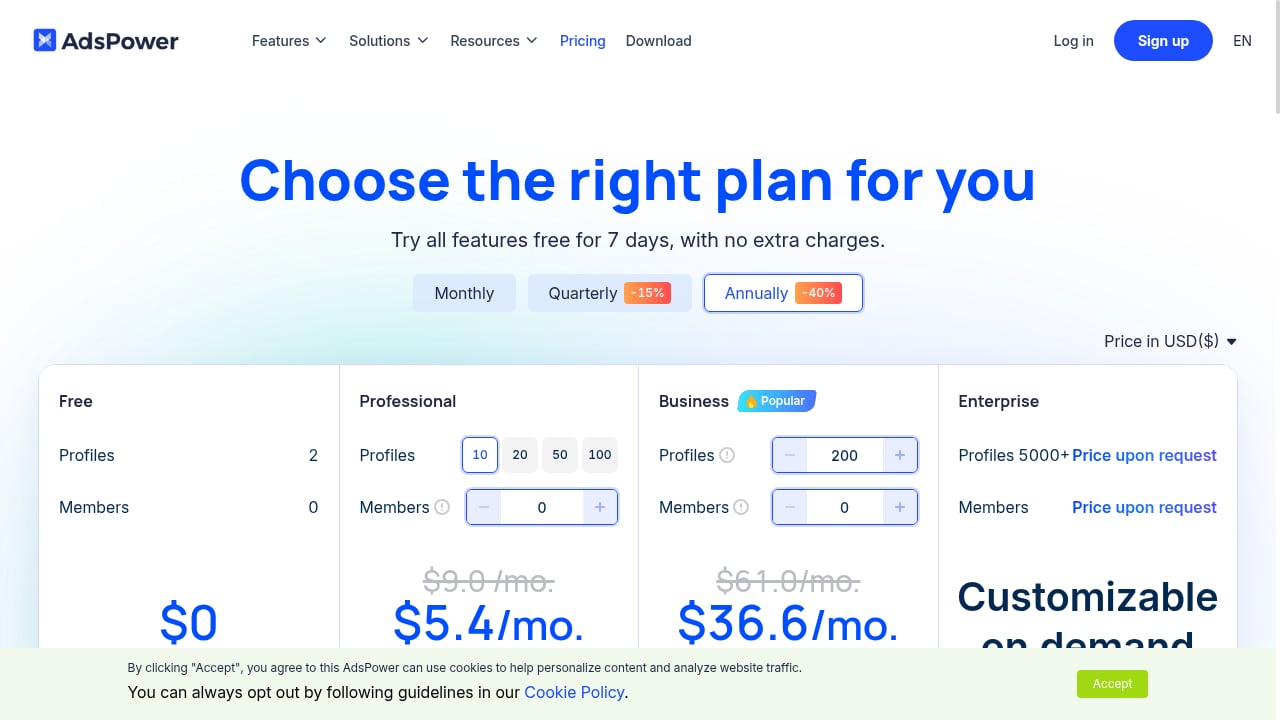
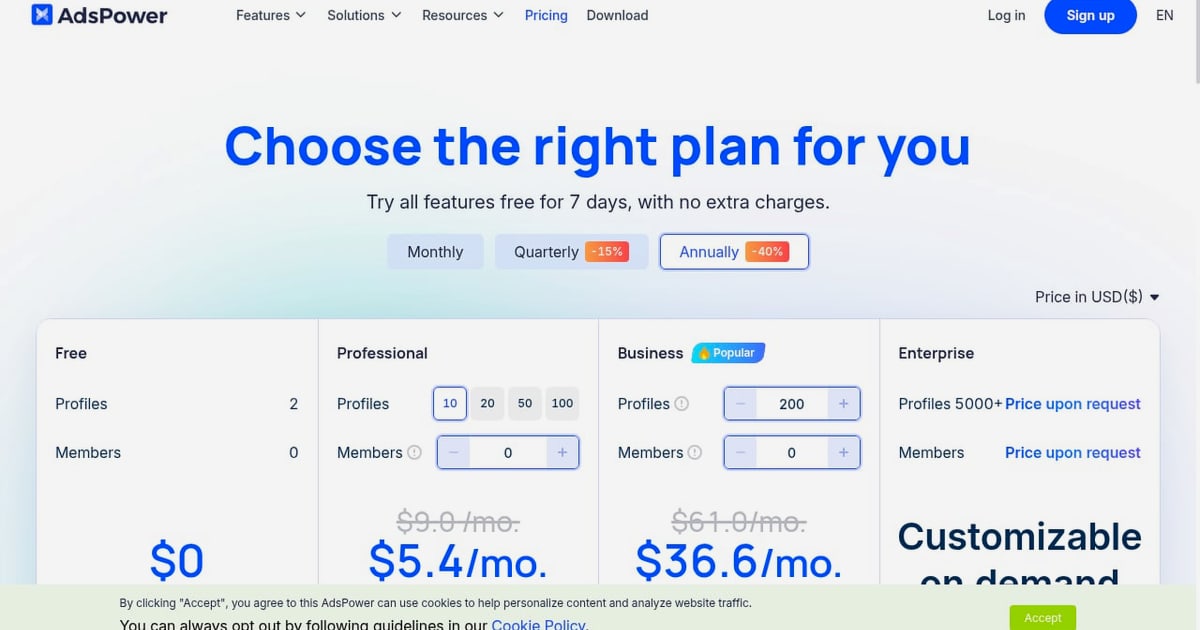
First viewport screenshot of AdsPower Pricing Plan: Choose the Best Plan for Your Team.
There are three main routes: dedicated marketplaces, auction platforms, and direct outreach. Each has trade-offs.
Platforms like Sebuda and Fameseller focus specifically on social accounts. They typically offer escrow, account analytics, and filters by platform, country, and follower range. Sebuda, for example, advertises escrow with low commission and analytics that help buyers compare accounts. Fameseller lists Instagram, TikTok, YouTube, Facebook, and Pinterest accounts with auction-style bidding.
Pros: built-in buyer traffic, escrow, category filters. Cons: commission fees, variable listing quality, and you still need to verify the buyer's intent.
Flippa and similar platforms primarily sell websites and online businesses, but social assets are often bundled with them. If your account is tied to a content site or store, this can unlock higher valuations.
Pros: larger deal sizes, bundled assets. Cons: social accounts are rarely sold separately, so it takes more digging to find the right listing.
Communities like Swapd vet members before they can trade, which reduces scam risk. Direct outreach to niche page admins can also work, as The Website Flip demonstrated when it acquired a 54,000-member Facebook group for $2,500 (about $0.046 per member). That deal shows the value of negotiating outside a formal marketplace when you know the niche.
Pros: no platform commission, flexible terms. Cons: no built-in escrow, higher trust burden on both sides.
For a broader comparison of tools that support multi-account operations, see our top 10 antidetect browser and cloud phone software rankings.
Never complete a social account sale without escrow unless you have a long-standing relationship with the buyer. A proper escrow flow:
Red flags to avoid:
Also check the platform's rules. Some networks prohibit account sales in their terms of service, and a transfer can result in a ban even if the payment was legitimate. Factor that risk into your pricing and your choice of marketplace.
First viewport screenshot of Check the Release & Update Notes of AdsPwer.
A clean transfer protects both parties:
Step 6 is where many transfers fail. A sudden login from a new country or device can trigger a security review. If you manage multiple accounts or buy and resell them, using isolated browser profiles helps keep each account's fingerprint separate. Tools like AdsPower create unique browser fingerprints for each profile, which reduces the risk of cross-account flags when you are logging into several accounts from one machine. You can see how this works in practice in our AdsPower proxy setup guide.
First viewport screenshot of How to Use AdsPower for Different Use Cases.
If you sell accounts regularly, you are effectively running a multi-account operation. That creates two risks:
Practical safeguards:
For a deeper look at how fingerprint isolation and proxy pairing work, our AdsPower vs Maskfog comparison covers the practical differences.
High demand, but transfers can trigger reviews. Business accounts with linked Facebook pages are more complex to move. Buyers often want the original email included.
Fast-growing market. Creators and brands buy niche accounts for reach. Monetization eligibility and region matter a lot to price.
Channels are valued on watch time, subscriber quality, and monetization status. Transfers are technically possible but can affect monetization if the channel is reviewed.
Verified accounts and niche followings command premiums. Handle changes are visible, so buyers often prefer to keep the original handle.
Channels and groups are sold for community access. Ownership transfer is relatively straightforward, but member quality varies.
In most jurisdictions, selling an account is a contractual matter between buyer and seller. However, platform terms of service may prohibit transfers, and violating them can result in a ban. Check the specific platform's rules and local regulations before proceeding.
It depends on niche, engagement, audience geography, and monetization. General-niche accounts often sell for $0.01–$0.10 per follower, while premium niches and verified accounts can go higher. Revenue-generating accounts are usually priced at 12–36× monthly profit.
Use a marketplace with escrow, verify the buyer, document the account's metrics, and transfer credentials only after funds are secured. Avoid direct payments without protection.
Yes, if the transfer is done cleanly and the buyer maintains consistent activity. Sudden changes in login location or posting style can cause follower loss or platform reviews.
If you hold several accounts at once, isolated browser profiles and proxies help prevent cross-account detection. Anti-detect browsers like AdsPower are built for this use case.
Selling a social media account is a legitimate way to monetize an audience, but the difference between a smooth sale and a disaster comes down to preparation. Price the account on engagement and revenue, not just followers. Use escrow, document everything, and transfer ownership carefully. If you operate at scale, keep each account in its own isolated environment so a single flag does not take down your entire inventory. Done right, an account sale can be a clean exit or a profitable flip.


