
AdsPower vs ClonBrowser: Which Anti-Detect Browser Wins?
Nov 18, 2026
Web scraping has evolved beyond simple HTTP requests. Today’s most effective data extraction workflows marry managed scraping APIs with robotic process automation (RPA) capabilities—allowing you to not only fetch data but also orchestrate complex, stateful interactions across thousands of pages. Whether you need to monitor e-commerce prices, generate AI training datasets, or automate lead generation, the fusion of scraping API and RPA platform transforms how businesses collect web data at scale.
At AdsPower, we research and test tools that power data-driven content strategies. This list ranks the top 10 web scraping API and RPA platform products of 2026, evaluated against transparent criteria and backed by independent benchmarks rather than vendor claims.
Top 10 Web Scraping API & RPA Platforms 2026 product interface and feature overview.
Each product was assessed on six dimensions critical for production-grade scraping and automation:
No single platform wins every category. We ranked them on overall utility for teams that need both a reliable API and RPA-like orchestration—not just a fetch API.

Top 10 Web Scraping API & RPA Platforms 2026 product interface and feature overview.
| Platform | Best For | RPA Capability | JavaScript Rendering | Starting Price |
|---|---|---|---|---|
| Bright Data | Enterprise & highest success rates | Pre-built scrapers, Data Collector, real-time triggers | Yes | $0.75/1K successful requests |
| Zyte | Scrapy teams & automatic extraction | Scrapy Cloud, scheduled spiders, no-code Zyte Studio | Yes | Pay-per-success, free trial |
| Apify | Pre-built Actors & full web automation | Thousands of community Actors, scheduling, integrations | Yes | Free tier ($49 platform credit) |
| Scrapingpass | Custom RPA projects & developer marketplace | Marketplace for custom scraping/RPA, project management | Yes | Free (500 reqs), Hobby $29/mo |
| Oxylabs | Enterprise regulated teams & large proxy networks | Slow-crawler settings, headless browser management | Yes | Custom enterprise plans |
| ScrapingBee | Simple point-and-shoot API for developers | Limited automation, but integrates easily with scheduling scripts | Yes | Free trial, plans from $49/mo |
| ScraperAPI | High-volume commodity scraping on a budget | Lightweight job scheduling (not full RPA) | Yes | From $49/mo (5,000 requests) |
| Decodo (Smartproxy) | Mid-market flat-rate pricing with anti-bot | Dedicated headless browser with no-code site navigation | Yes | Starts at $50/mo (30K requests) |
| ZenRows | Heavily protected targets on a budget | Not RPA-first but advanced fingerprinting and rotation | Yes | Free trial, plans from $29/mo |
| Octoparse | Non-technical users & visual workflow design | Full visual RPA builder for point-and-click extraction, scheduled cloud runs | Yes | Free tier, subscription from $89/mo |
Top 10 Web Scraping API & RPA Platforms 2026 product interface and feature overview.
Bright Data dominates independent benchmarks. In Scrape.do’s 2026 test of 11 providers across seven hardened domains, it achieved a 98.44% average success rate—the only service to hit 100% on Indeed, Zillow, Capterra, and Google simultaneously. The network spans 400M+ residential IPs across 195 countries.
Beyond the raw API, Bright Data offers RPA-like capabilities through its Data Collector (visual builder), 437+ pre-built scrapers for Amazon, LinkedIn, TikTok, and more, and a SERP API that automates search engine result tracking. These tools, combined with a 99.99% uptime SLA, make it the default choice for enterprises that need to operationalize web data pipelines without maintaining browser farms. Pricing is pay-per-success, so failed requests don’t drain your budget.
If you’re scraping login-gated social platforms or marketplaces, pairing the Bright Data API with an anti-detect browser like AdsPower can lock in undetectable sessions while Bright Data handles the proxy rotation and IP diversity.
Zyte (formerly Scrapinghub) is the company behind the open-source Scrapy framework, and its cloud platform brings RPA-like orchestration to Scrapy spiders. The Automatic Extraction API returns structured JSON from any product page, article, or job listing without XPath maintenance. Zyte Studio adds a visual interface for non-developers, enabling no-code automation saved as reusable spiders that run on a schedule.
Zyte’s strength lies in the Scrapy ecosystem: you can deploy your own Scrapy spiders to Zyte Cloud, benefit from managed headless browsers, and tap into AI-driven extraction models. This makes it ideal for hybrid teams where developers need full control while business users need self-service automation.
Apify is a full-stack web automation and RPA platform. Its Actor store contains tens of thousands of pre-built scrapers for Google Maps, Instagram, Twitter, and Airbnb—each an RPA robot that you can trigger via API, schedule, or webhook. Apify integrates with Make, Zapier, and GitHub, turning scraping into a leg of larger automated workflows.
Developers can create custom Actors using Playwright, Puppeteer, or plain JavaScript, and the platform handles proxy rotation, session management, and residential IPs. The free tier includes $49 in monthly platform credits, enough to test most use cases. For teams that need to automate complex multi-step interactions (log in, search, paginate, parse), Apify is the closest thing to an RPA platform built specifically for the web.
Scrapingpass combines a straightforward REST API (JavaScript rendering, rotating proxies, geotargeting) with a unique twist: a marketplace where you can post custom scraping or RPA projects and have them fulfilled by vetted developers. This turns the platform into an on-demand automation service, not just a tool. If your site requires a complex RPA bot that performs login flows, file downloads, or form submissions, you can outsource the build while using the API for simpler targets.
The platform offers a free plan (500 requests), and paid plans scale from Hobby ($29/mo) to Growth ($50/mo). The dual nature—API plus human talent for RPA—makes Scrapingpass a flexible choice for startups and data analysts who lack in-house automation engineers.
Oxylabs provides a 102M+ residential proxy pool and a Web Scraper API that handles JavaScript rendering, CAPTCHA solving, and rotating fingerprints. For RPA, Oxylabs offers Headless Browser access with full cookie management and a Slow-Crawler feature that mimics human behavior to avoid rate limits on protected e-commerce sites.
Large-scale price monitoring and market research teams rely on Oxylabs’ compliance posture (GDPR, CCPA) and enterprise support. While not a traditional visual RPA tool, the platform’s ability to run thousands of simultaneous browser sessions through a single API endpoint effectively digitizes the automation layer.
ScrapingBee is a developer-first API that handles headless Chrome, proxies, and retries behind a single endpoint. It doesn’t offer a visual RPA builder, but its credit system includes features like AI-powered extraction and screenshot taking, which you can chain in your own automation code. For small teams building custom RPA scripts with Python or Node.js, ScrapingBee eliminates the infrastructure headache, allowing you to schedule and orchestrate jobs via cron or cloud functions.
ScraperAPI shines for high-volume, moderately protected sites. It offers JavaScript rendering, geotargeting, and a simple API—all at competitive per-request rates. While it lacks a native RPA builder, you can combine it with tools like Make.com or custom scripts to build automated data pipelines. For teams scraping thousands of product pages daily without needing complex session flows, ScraperAPI is cost-effective and reliable.
Decodo, by Smartproxy, positions itself as a middle ground between basic APIs and enterprise platforms. Its Headless Browser product includes a no-code navigation builder that lets you define clicks, scrolls, and form fills visually—transforming it into a lightweight RPA tool for data extraction. Flat-rate pricing with a generous 30,000-request monthly allowance makes it predictable for growing teams.
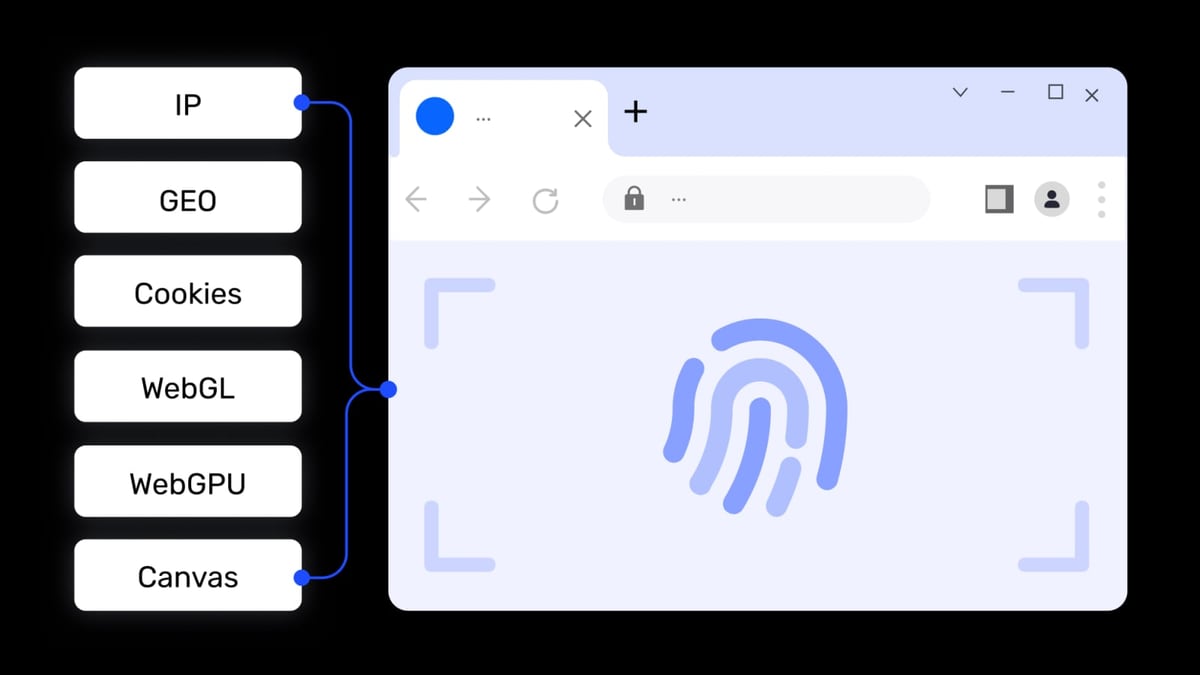
ZenRows focuses on defeating advanced anti-bot systems. It automatically generates unique browser fingerprints, rotates TLS ciphers, and solves CAPTCHAs. While not an RPA platform per se, developers often pair ZenRows with workflow automation tools like n8n or Apache Airflow to create custom scraping robots. For startups that need to scrape Cloudflare-protected targets on a tight budget, ZenRows offers strong unblocking at entry-level pricing.
Octoparse is a desktop and cloud-based visual scraping tool that embodies RPA for data extraction. Non-technical users can point, click, and configure extraction rules, then schedule the workflow to run automatically on Octoparse’s cloud servers. It handles pagination, infinite scroll, and drop-down menus out of the box. While it doesn’t provide a headless API for embedding, it’s ideal for marketers and analysts who need automated daily data dumps without writing code.
Top 10 Web Scraping API & RPA Platforms 2026 product interface and feature overview.
Start with your data target. If you need to extract from heavily protected sites like Walmart or LinkedIn, Bright Data, ZenRows, or Oxylabs are proven performers. For simpler static pages, ScraperAPI or ScrapingBee offer straightforward APIs at lower cost.
Decide who builds the automation. If you have developers, Apify, Zyte, and Bright Data provide deep integration options. If non-technical users must maintain scrapers, Octoparse, Decodo’s visual builder, or Scrapingpass’s marketplace become more attractive.
Consider compliance and scale. Enterprise legal teams will value Bright Data and Oxylabs for their ISO certifications and GDPR programs. Small teams testing ideas can lean on free tiers from Scrapingpass, ScrapingBee, or Apify.
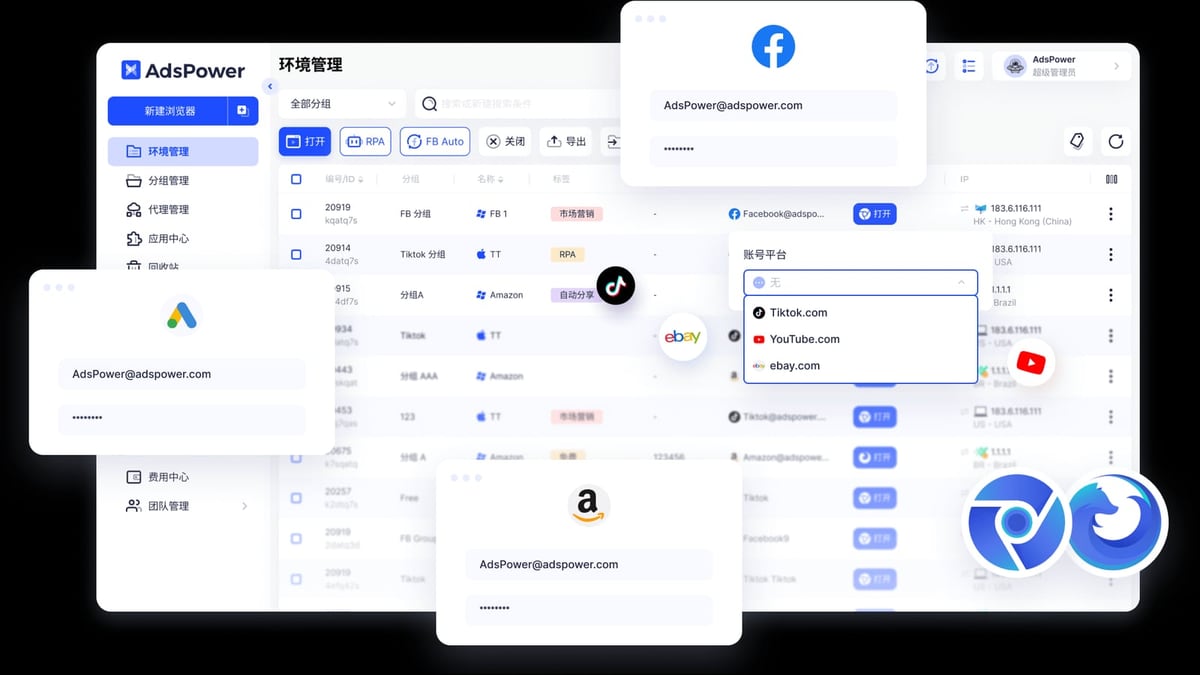
Don’t forget multi-account scenarios. Many scraping projects require logging into accounts to access personalized data. While the platforms above manage IP rotation and CAPTCHAs, maintaining undetectable browser fingerprints across hundreds of accounts is where a dedicated anti-detect browser like AdsPower becomes essential. Its RPA automation and fingerprint isolation add a layer of account safety that complements any scraping API—read our comparison guide to see how it stacks up.
What is the difference between a web scraping API and an RPA platform? A web scraping API handles the technical layers of data extraction: rotating proxies, JavaScript rendering, and returning structured data. An RPA platform mimics human interaction (clicks, form fills, logins) and orchestrates repeatable workflows end-to-end. Many modern tools blend both—offering an API for raw data and visual builders or pre-built robots for complex automation.
Can I use open-source tools like Scrapy or Playwright instead of a managed platform? Yes, but you’ll own the entire infrastructure: proxy management, browser farms, retry logic, and anti-bot evasion. For high-volume production, the engineering time frequently exceeds the cost of a managed service. Open-source is great for one-offs or learning, but scaling quickly reveals hidden costs.
Do these platforms work with AI agents and LLMs? Several now offer Markdown or schema-based extraction tailored for RAG pipelines. Bright Data and Zyte, for example, return AI-ready structured output. If you need web access for your AI agent, look for platforms with API endpoints that deliver clean text directly to the model.
Is using an anti-detect browser with a scraping API against a site’s terms? Always respect a website’s robots.txt and terms of service. Anti-detect browsers are legitimate tools for multi-account management in compliance with platform rules. When combined with responsible scraping practices, they help avoid overloading servers and reduce the use of brittle hacks.
The 2026 landscape of web scraping API and RPA platforms is richer than ever. Whether you need enterprise-grade reliability, a marketplace of pre-built robots, or a visual automation builder, there’s a solution that aligns with your team’s skills and budget. Use the independent benchmarks and criteria above to shortlist, then test with your own target URLs—because in the end, only real-world success rates matter.


